
High-Purity Synthesized Peptides for Clinical & Commercial Sourcing
Explore our primary batch of chemically synthesized peptides manufactured under rigorous quality control standards in Hangzhou, China.
High-Quality Selank CAS: 129954-34-3 Manufacturer, Service
Request Quote & Specs
Custom Tesamorelin CAS:218949-48-5 Manufacturer, Manufacturers
Request Quote & Specs
High-Quality Mots-C Peptide 16 Amino Acids - China Suppliers and Factory for Metabolic Regulation
Request Quote & Specs
Custom Retatrutide CAS NO: 2381089-83-2 Quotes, Pricelist
Request Quote & Specs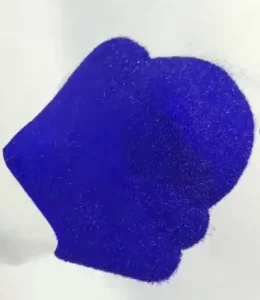
High-Quality Copper Tripeptide GHK-Cu CAS:89030-95-5 - Premium Quality from China Suppliers
Request Quote & Specs
Custom Mots-C CAS: 1627580-64-6 Pricelist, Service
Request Quote & Specs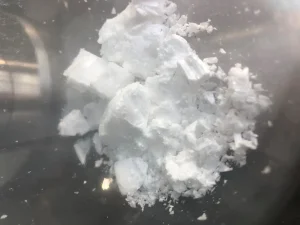
Custom Mazdutide CAS 2259884-03-0: Top China Suppliers for Dual GCG/GLP-1 Agonist
Request Quote & Specs
Custom Dulaglutide CAS NO:923950-08-7 Manufacturers, Service
Request Quote & SpecsSolid Phase Peptide Synthesis (SPPS): Chemical Fundamentals & Industrial Execution
An in-depth analysis of modern SPPS technologies, resin loading dynamics, orthogonally protected amino acids, and strategies for suppressing epimerization during long-chain synthesis.
Orthogonal Protecting Group Strategies
Solid Phase Peptide Synthesis (SPPS) relies heavily on orthogonal protection chemistry to prevent unwanted side reactions during iterative coupling cycles. The dominant paradigm in commercial CDMO operations is the Fmoc/tBu (Fluorenylmethyloxycarbonyl/tert-Butyl) strategy. Unlike legacy Boc/Bzl chemistry which requires hazardous anhydrous hydrogen fluoride (HF) for final cleavage, Fmoc synthesis utilizes mild base (such as 20% piperidine in DMF or eco-friendly alternatives) for N-alpha deprotection, while side-chain functional groups are protected with acid-labile groups (tBu, Trt, Pbf, Boc) cleaved via trifluoroacetic acid (TFA).
- Fmoc-N-alpha Deprotection: Base-catalyzed cleavage minimizing peptide backbone degradation.
- Acid-Labile Side-Chain Protection: High stability under basic coupling conditions.
- Resin Matrix Selection: Wang resin for C-terminal carboxylic acids; Rink Amide resin for C-terminal amides; CTC (2-Chlorotrityl chloride) resin for fully protected peptide fragment synthesis.
Coupling Reagents & Racemization Control
Efficiency in peptide bond formation requires advanced aminium/uronium and phosphonium coupling reagents. At Hangzhou Thinheal Pharma-Tech, our synthesis protocols integrate high-efficiency activation systems such as HATU, PyBOP, and DIC/Oxyma Pure to maintain yield while mitigating C-alpha racemization—particularly at sensitive residues like Cys and His.
By controlling activation temperature and employing mild tertiary bases (e.g., DIPEA or Collidine), deletion peptides (des-amino acid impurities) and diastereomers are systematically suppressed prior to global cleavage.
Industrial Process Comparison: SPPS vs. LPPS vs. Recombinant Expression
| Synthesis Technology | Optimal Sequence Length | Development Speed | Scalability & Yield | Impurity Profile Control | Target Product Profile |
|---|---|---|---|---|---|
| Solid Phase (SPPS) | 2 to 50 Amino Acids | Very Fast (Days to Weeks) | High (Multi-Kg to Multi-Ton) | Excellent (Stereospecific Control) | Therapeutic Peptides, GLP-1, Cosmetics |
| Liquid Phase (LPPS) | Short Peptides (<10 AAs) | Moderate (Process Intensive) | Very High (Ton Scale) | Good (Requires Intermediate Isolation) | Simple Di/Tri-peptides, High Volume |
| Hybrid SPPS/LPPS | Complex >40 AAs / Lipopeptides | Fast to Moderate | High (Fragment Condensation) | Superior for Complex Modified Peptides | Semaglutide, Tirzepatide Derivatives |
| Recombinant Biosynthesis | Long Proteins (>50 AAs) | Slow (Cell Line Engineering) | High (Fermentation Vessels) | Post-translational Variation Challenges | Large Proteins, Insulin Analogues |
Global SPPS Development Trends: Incretins, Green Chemistry & Automation
The biopharmaceutical landscape is undergoing a monumental shift driven by metabolic disease therapeutics and advanced cosmetic applications. Here are the core structural trends driving peptide manufacturing today.
1. Surge in GLP-1/GIP Agonist Commercial Demand
The unprecedented success of metabolic regulatory peptides such as Semaglutide, Tirzepatide, Retatrutide, and Mazdutide has created massive demand for high-capacity solid-phase synthesis. Manufacturing these multi-branched or lipophilic acyl-conjugated peptides requires ultra-stable SPPS reactors, specialized side-chain fatty acid attachment chemistry, and sophisticated preparative HPLC purification platforms.
2. Green Peptide Chemistry Initiatives
Regulatory agencies (EPA, EMA) are increasingly scrutinizing traditional SPPS solvents like N,N-Dimethylformamide (DMF) and N-Methyl-2-pyrrolidone (NMP) due to toxicity concerns. Modern CDMOs are transitioning to eco-friendly alternative solvents such as 2-Methyltetrahydrofuran (2-MeTHF), Cyrene, and dimethyl carbonate (DMC) alongside solvent recycling loops to achieve sustainable commercial production without compromising coupling yields.
3. Automated High-Throughput & Microwave Assistance
The incorporation of microwave-assisted heating and continuous flow SPPS reactors has dramatically shortened reaction cycles from hours to minutes per amino acid residue. Real-time UV monitoring of Fmoc deprotection steps ensures complete coupling before progression, yielding high-purity crude peptides and reducing down-stream purification costs.
Global Enterprise Procurement Needs & Cost Structure Analysis
Understanding buyer intent, quality specifications, analytical parameters, and pricing dynamics across research, clinical, and commercial volume tiers.
Key Quality Parameters Demanded by Enterprise Buyers
When global pharmaceutical procurement managers and quality assurance auditors evaluate SPPS suppliers, compliance extends far beyond basic purity percentages. Key selection criteria include:
- HPLC Purity & Impurity Profiling: Strict identification of single maximal impurities (<0.5%) and total impurities (<2.0%). Deletion sequences and beta-isomerization must be characterized.
- Counter-Ion Content Control: Flexible salt exchange protocols providing Acetate, Trifluoroacetate (TFA), or Hydrochloride (HCl) salts based on formulation requirements.
- Endotoxin & Bioburden Limits: Parenteral grade peptides require low endotoxin levels (<10 EU/mg or tailored for injection formulations).
- Residual Solvents & Heavy Metals: Verification via Headspace GC and ICP-MS against ICH Q3C/Q3D guidelines (limiting DMF, TFA, acetonitrile, and heavy metals).
Deconstructing the Peptide Cost Structure & Pricelist Dynamics
Commercial SPPS pricing is dictated by five primary drivers:
- Protected Amino Acid & Resin Raw Materials: Non-canonical amino acids, fatty acid chains (e.g., C18 diacid derivatives), and specialty resins significantly impact baseline material costs.
- Sequence Length & Synthesis Complexity: Sterically hindered residues, hydrophobic domains causing aggregation, and multiple disulphide bonds increase coupling failure risks.
- Purification Yield: Preparative Reverse-Phase HPLC (RP-HPLC) yield varies with crude purity. Higher crude quality directly yields lower manufacturing cost per gram.
- Batch Volume Scale: Scale economies are pronounced. Moving from Gram-scale R&D batches to Multi-Kilogram commercial output lowers unit costs by up to 70%.
- Lyophilization Cycle Time: Freeze-drying long-chain peptides requires specialized freeze-drying cycles to maintain physical stability and reconstitution characteristics.
Hangzhou Thinheal Pharma-Tech: Integrated CDMO Platform
Established in 2019 in Hangzhou, China, Thinheal Pharma-Tech delivers multi-ton peptide API synthesis capacity, backed by a core leadership team possessing nearly 20 years of technical management excellence.
End-to-End Peptide Industrialization Capabilities
Thinheal operates a fully integrated industrial platform combining independent R&D, process development, custom synthesis (CRO/CDMO), and large-scale manufacturing across key product segments:
- Generic Peptide APIs: Turnkey supply of mature, off-patent therapeutic APIs with comprehensive batch documentation.
- Therapeutic Peptides: Metabolic, endocrine, gastrointestinal, and oncology therapeutic candidate development.
- GLP-1 & GLP-2 Analogues: Industry-leading synthesis of Semaglutide, Tirzepatide, Retatrutide, Dulaglutide, and Teduglutide.
- Cosmetic Functional Peptides: Bioactive signal peptides (e.g., GHK-Cu, Matrixyl derivatives) for high-end skincare formulations.
Advanced Analytical & Quality Control Systems
Quality assurance is the cornerstone of our multi-ton output. Our analytical laboratories are equipped with cutting-edge instrumentation to validate chemical integrity at every step:
- High-Resolution UHPLC-MS / ESI-MS: Exact molecular weight verification and sequence impurity identification.
- Analytical RP-HPLC: Purity determination using multi-wavelength UV and ELSD detectors.
- Amino Acid Analysis (AAA): Accurate peptide content and stoichiometry confirmation.
- Physical-Chemical Characterization: Specific optical rotation, moisture content (Karl Fischer), solubility profiles, and elemental analysis.
Global Compliance, DMF Support & Regional Localization
Bridging international regulatory standards with localized customer desk operations to streamline peptide API procurement across worldwide jurisdictions.
cGMP Quality Management & Regulatory Filings
Hangzhou Thinheal Pharma-Tech aligns its manufacturing practices with international cGMP standards (US FDA 21 CFR Part 210/211, EMA EudraLex Volume 4, NMPA guidelines). We support client regulatory dossiers by providing:
- Drug Master File (DMF) Documentation: Comprehensive Type II DMF preparation for active pharmaceutical ingredients.
- Stability Testing: Accelerated and long-term stability studies compliant with ICH Q1A(R2) conditions.
- Vendor Qualification Support: On-site audit hosting, remote video inspection access, and detailed QA questionnaires.
Dedicated Regional Desk Architecture
To facilitate seamless communication, transparent price quotes, and rapid technical support, Thinheal maintains four specialized international sales and technical support desks:
- USA & Europe Desk: Dedicated point of contact for North American and Western European pharma CDMO clients.
- Russia, CIS & Europe Desk: Multilingual technical reps handling Eastern Europe, Russia, and CIS regional compliance.
- Asia Desk: Focused support for East Asian and Southeast Asian biopharmaceutical innovators.
- Middle East & East Asia Desk: Specialized desk serving regional compounding, formulation, and commercial distribution buyers.
Technology Roadmap: The Next Decade of Solid Phase Synthesis (2025–2035)
Predictive insights into next-generation peptide manufacturing, machine learning sequence optimization, and macrocyclic peptide architectures.
AI-Driven Retrosynthetic Optimization
Machine learning algorithms are transforming peptide process design. By analyzing historical coupling efficiency data, predictive AI models now recommend optimal resin selection, swelling solvent compositions, and specific coupling reagent pairs for difficult, aggregation-prone sequences—drastically cutting empirical trial cycles.
Peptide Drug Conjugates (PDCs) & Macrocycles
The emergence of Peptide Drug Conjugates (PDCs) combining targeted peptides with cytotoxic payloads or oligonucleotides requires complex SPPS chemistries. Thinheal's R&D roadmap emphasizes orthogonal linker attachment, ring-closing metathesis (RCM) for stapled peptides, and enzymatic ligation for large, multi-domain peptide structures.
Continuous Flow Microfluidic SPPS
Flow-chemistry reactors operating at elevated temperatures allow amino acid coupling times measured in seconds. Integrating continuous microfluidic flow into large-scale production will redefine multi-ton manufacturing economics, reducing solvent consumption by up to 60% while maintaining unmatched batch uniformity.
Commercial Scale Peptide APIs & Specialty Analogues
Explore our secondary batch of synthetic peptide APIs available for immediate quote requests, contract manufacturing, and commercial distribution.
Custom Tirzepatide CAS NO: 2023788-19-2 Pricelist, Service
Request Quote & Specs
Custom Semaglutide CAS 910463-68-2 - Weight Management Solution
Request Quote & Specs
Custom Tesamorelin CAS 218949-48-5: Premium China Suppliers & Factory
Request Quote & Specs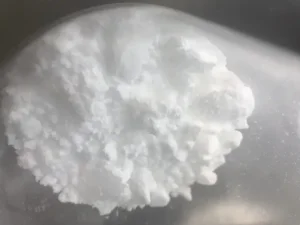
High-Quality Triptorelin CAS:57773-63-4 Quotes, Service
Request Quote & Specs
High-Quality Deslorelin CAS 57773-65-6 - Premium China Suppliers
Request Quote & Specs
High-Quality China Orforglipron CAS 2212020-52-3 - Leading Factory
Request Quote & Specs
Custom Dulaglutide CAS 923950-08-7 - Reliable Factory Production
Request Quote & Specs
High-Quality Bremelanotide/PT141 CAS 189691-06-3 - Melanocortin Agonist
Request Quote & SpecsSolid Phase Peptide Synthesis Sourcing & Technical Q&A
Clear, authoritative answers to critical technical, quality control, lead time, and pricing questions asked by biopharmaceutical procurement teams.