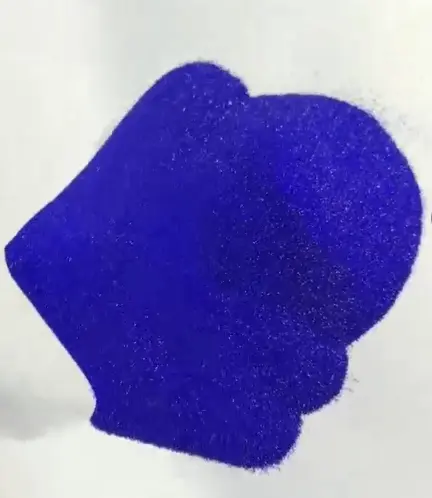
High-Quality Copper Tripeptide GHK-Cu CAS:89030-95-5 - Premium Quality from China Suppliers & Factory Pricelist, Service
Copper peptide (GHK-Cu) is a naturally occurring complex formed by the coordination of a glycine-histidine-lysine tripeptide and a copper ion (Cu²⁺). This powerful signal peptide is found in trace amounts in human plasma and various tissues, including cerebrospinal fluid, saliva, and urine, though its levels significantly decline with age. GHK-Cu serves as a vital cellular messenger, regulating the expression of numerous genes essential for tissue repair and homeostasis. It exerts remarkable biological effects by binding to specific receptors on the cell surface, such as CXCR4, thereby activating a cascade of cellular pathways, As a leading supplier of high-quality copper peptides in China, our factory ensures that we provide the best products to support research and development in skincare and therapeutic applications. Our commitment to excellence in manufacturing and sourcing positions us as a trusted partner for those seeking reliable copper peptide solutions
Copper peptide (GHK-Cu) is a natural complex formed by the coordination bond between a glycine-histidine-lysine tripeptide and a copper ion (Cu²⁺). It is a signal peptide that exists in trace amounts in human plasma and various tissues (such as cerebrospinal fluid, saliva, and urine), but its levels decrease significantly with age. Its core function lies in acting as a "cellular messenger," regulating the expression of various genes related to tissue repair and homeostasis. It primarily exerts its powerful biological effects by binding to specific receptors on the cell surface (such as CXCR4), activating a series of cellular pathways.
Therapeutic Areas
The application of GHK-Cu has expanded from its initial use in skin care to multiple medical treatment areas.
Skin regeneration and medical aesthetics
Anti-aging and wrinkle improvement
Stimulates the synthesis of collagen I, III, IV and elastin, improving skin firmness, elasticity and fine lines.
Wound healing and scar repair
Accelerates the healing of acute and chronic wounds (such as diabetic ulcers and burns) and improves the appearance of scars by regulating collagen metabolism and reducing excessive inflammation.
Improves skin barrier and moisturizes
Increases the content of hyaluronic acid and glycosaminoglycans in the skin, enhancing the skin's ability to retain moisture.
Soothing and Repairing
Reduces UV damage and post-inflammatory hyperpigmentation, and repairs damaged skin.
Hair regrowth
It stimulates hair follicle growth and prolongs the hair growth cycle, and is used to treat hair loss problems such as androgenetic alopecia.
Bone and joint health
It promotes osteoblast differentiation and the expression of bone matrix proteins (such as osteocalcin), which helps in bone repair and regeneration. It also has anti-inflammatory effects and has potential benefits for diseases such as osteoarthritis.
Neuroprotection and cognitive health
Studies have shown that GHK-Cu can promote neurite growth, protect nerve cells from oxidative stress damage, and may play a protective role in neurodegenerative diseases such as Alzheimer's disease by regulating neuroinflammation.
Anti-fibrosis
By downregulating profibrotic factors such as TGF-β, it inhibits the abnormal fibrotic process in organs such as the liver, lungs, and skin.
Anti-cancer and chemotherapy protection
Studies show that it has dual potential: on the one hand, it may inhibit the metastasis and angiogenesis of certain tumor cells; on the other hand, it can protect normal cells from damage by chemotherapy drugs and promote the proliferation of bone marrow stem cells.
Outlook & Development
GHK-Cu has a promising future due to its multiple benefits, good safety profile, and natural biocompatibility, but it also faces some challenges.
Prospects
Multi-field integration and innovation
The application of GHK-Cu is expanding from traditional topical skin care to high-end functional skin care products, medical-grade dressings, regenerative medicine materials (such as bioactive scaffolds), and even drugs for the treatment of systemic diseases.
Precision delivery technology
Improving transdermal absorption and targeting through advanced delivery technologies such as liposomes, nanoparticles, microneedles, and transdermal peptides is a key research direction that can greatly enhance its efficacy and application range.
Combination therapy
Combining GHK-Cu with other active ingredients (such as growth factors, vitamin C, and other peptides) to produce synergistic effects is a popular trend in product development.
Exploration of oral and injectable formulations
Although currently mainly for external use, oral or local injection formulations for systemic diseases such as bone and nerve diseases are under preclinical and early clinical research, which is expected to open up new markets.
A key component of the "healthy aging" market
As the global population ages, the demand for natural bioactive substances to maintain the health of skin, hair, bones and cognition is surging, and GHK-Cu plays an important role in this.
Challenges and Development Directions
Stability and Formulation Challenges
Copper ions readily react with other components, requiring high standards for pH value and compatibility in the formulation. Maintaining their long-term stable activity is a major technical challenge.
Deepening clinical evidence
Despite a wealth of in vitro and animal studies, large-scale, high-quality human clinical trials for specific indications (especially in the medical treatment field) still need to be strengthened to confirm efficacy and guide optimal use.
In-depth study of its mechanism of action
There is still room for exploration of its specific molecular targets and the network regulation mechanism of signaling pathways. A deeper understanding will help develop more effective derivatives or analogs.
Regulations and Standards
As a cosmetic ingredient or medical device component, it must comply with strict regulations. Developing it into a drug requires an even longer and more stringent approval process.
Conclusion
In summary, copper peptide (GHK-Cu) is a highly promising multifunctional regenerative signaling molecule. It is evolving from a popular skincare ingredient into a bioactive compound with broad medical applications. Future development will heavily rely on breakthroughs in delivery technology, the accumulation of clinical evidence, and interdisciplinary innovation (materials science, pharmacy, and medicine). Driven by the trends in regenerative and preventative medicine, GHK-Cu is poised to play an increasingly important role in the health industry.
Frequently Asked Questions (FAQ)
What is Copper peptide (GHK-Cu)?
Copper peptide (GHK-Cu) is a natural complex formed by the coordination bond between a glycine-histidine-lysine tripeptide and a copper ion (Cu²⁺). It acts as a "cellular messenger" that regulates genes related to tissue repair and homeostasis.
What are the main skin benefits of GHK-Cu?
It stimulates the synthesis of collagen and elastin to improve wrinkles and skin firmness. Additionally, it accelerates wound healing, improves skin barrier function, increases moisture retention, and helps repair UV damage.
Can GHK-Cu help with hair loss?
Yes, GHK-Cu stimulates hair follicle growth and prolongs the hair growth cycle. It is frequently used in treatments for hair loss problems such as androgenetic alopecia.
What are the potential medical applications beyond skincare?
Beyond skincare, GHK-Cu shows potential in bone and joint health, neuroprotection (such as Alzheimer's disease), anti-fibrosis in organs like the liver and lungs, and even anti-cancer and chemotherapy protection.
What are the challenges in using GHK-Cu in products?
A major challenge is its stability. Copper ions readily react with other components, requiring strict pH control and formulation compatibility to maintain long-term stable activity.
What is the future outlook for GHK-Cu?
The future is highly promising, with expected advancements in precision delivery technologies (like liposomes and microneedles), combination therapies, and potentially oral or injectable formulations for systemic diseases in the "healthy aging" market.