
High-Purity GLP-1 Analogues & Therapeutic Peptides
Explore our core commercial active pharmaceutical ingredients (APIs) and custom synthesized peptide solutions for metabolic, endocrine, and gastroenterology pipelines.
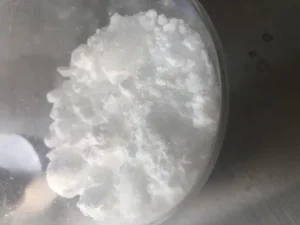
High-Quality Teduglutide CAS NO: 287714-30-1 - China Suppliers & Factory for Short Bowel Syndrome Treatment Manufacturer, Service
Request Quotes & Specifications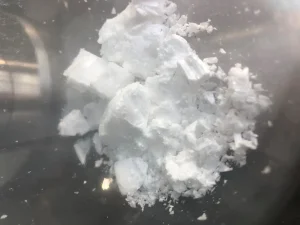
High-Quality Mazdutide CAS 2259884-03-0: Leading China Suppliers & Factory for Dual GCG/GLP-1 Agonist for Weight Loss Manufacturer, Quotes
Request Quotes & Specifications
High-Quality Semax Peptide CAS 80714-61-0 - Premier China Suppliers & Factory for CNS Health Solutions Manufacturer, Pricelist
Request Quotes & Specifications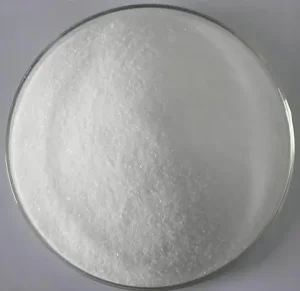
High-Quality Tirzepatide CAS 2023788-19-2: Leading China Suppliers & Factory for Advanced Weight Management Solutions Manufacturer, Quotes
Request Quotes & Specifications
Custom Retatrutide (CAS NO: 2381089-83-for Obesity and T2DM - China Suppliers and Factory Offering Innovative Solutions Manufacturers, Pricelist
Request Quotes & Specifications
Custom Deslorelin CAS 57773-65-6: Leading China Suppliers and Factory for Synthetic GnRH Analog Products Manufacturer, Pricelist
Request Quotes & Specifications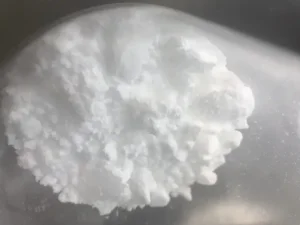
Custom Vasopressin (CAS NO: 50-57-- Trusted China Suppliers & Factory for Antidiuretic Hormone (ADH) Manufacturer, Manufacturers
Request Quotes & SpecificationsThe Global Scale & Paradigm Shift in GLP-1 Therapeutics
Analyzing the unprecedented expansion of incretin-based therapies across metabolic disorders, cardiovascular management, and novel multi-receptor agonist development.
Unprecedented Market Expansion
The global Glucagon-Like Peptide-1 (GLP-1) receptor agonist market is experiencing structural growth, projected to surpass $100 billion by 2030. Driven by widespread adoption for Type 2 Diabetes Mellitus (T2DM) and clinical breakthroughs in chronic weight management, demand for high-purity bulk active pharmaceutical ingredients (APIs) has strained legacy manufacturing supply chains.
Evolution to Multi-Receptor Agonism
Modern drug discovery has evolved from single-receptor GLP-1 mono-agonists to dual GIP/GLP-1 agonists (e.g., Tirzepatide) and triple GCG/GIP/GLP-1 agonists (e.g., Retatrutide). These complex multi-target peptides present intricate chemical structures requiring advanced side-chain acylation, hydrophobic lipophilic modifications, and strict control of diastereomeric impurities during scale-up.
Supply Security & CDMO Resilience
Pharmaceutical sponsors worldwide are actively diversifying their peptide supply chains to prevent single-source vulnerabilities. Partnering with specialized China-based CDMOs and peptide API manufacturers offers access to multi-ton automated synthesis infrastructure, ensuring uninterrupted clinical and commercial supply lines.
Global Enterprise Procurement Demands & Risk Mitigation
Addressing the technical, economic, and logistical hurdles global biopharmaceutical buyers face when sourcing industrial-scale GLP-1 peptide APIs.
Bottlenecks in Modern Peptide Procurement
Procuring GLP-1 receptor agonist active pharmaceutical ingredients requires more than standard chemical sourcing. Due to long chain lengths (often 30 to 39 amino acids) and hydrophobic fatty-acid side chains (such as diacid spacers conjugated via gamma-glutamyl linkers), manufacturing requires exceptionally rigorous process controls to prevent structural heterogeneity.
Total Cost of Ownership (TCO) Optimization
Peptide raw material expenses—specifically protected amino acids (Fmoc-monomers), coupling reagents (HATU, PyBOP, DIC/Oxyma), and high-grade solvents (DMF, NMP, MeCN)—represent up to 70% of total manufacturing costs. Advanced manufacturers utilize continuous-flow solvent recovery systems and optimized coupling stoichiometry to reduce the E-factor (environmental waste ratio), transferring significant cost advantages to global enterprise partners.
Vendor Qualification & Audit Readiness
Pharmaceutical buyers require comprehensive Quality Agreements, validated Analytical Method Transfer (AMT) protocols, and complete regulatory dossiers (DMF, ASMF, CEP). A robust supplier audit framework evaluates raw material origin traceability, nitrosamine risk assessments, residual solvent analysis (ICH Q3C), and elemental impurity controls (ICH Q3D).
Technical Roadmap: Solid-Phase, Liquid-Phase & Hybrid Synthesis
Comparative analysis of industrial manufacturing pathways for complex GLP-1 analogues and fatty-acid acylated peptides.
Achieving commercial-scale output of long-chain peptides requires tailored synthetic strategies. Depending on sequence composition, hydrophobicity, and target volume, manufacturers choose between Solid-Phase Peptide Synthesis (SPPS), Liquid-Phase Peptide Synthesis (LPPS), or Hybrid Segment Condensation strategies.
| Synthesis Route | Target Scale | Technical Advantages | Challenges & Mitigations |
|---|---|---|---|
| Sequential SPPS (Fmoc Strategy) | Grams to 100 kg / batch | Automated operation, high coupling efficiency, fast R&D cycle time, facile washing of excess reagents. | High solvent consumption. Mitigated by automated recycling plants and microwave-assisted/heated SPPS vessels. |
| Fragment Condensation (Hybrid SPPS/LPPS) | 50 kg to Multi-Ton | Combines short SPPS fragments in liquid phase. High atom economy, drastically reduced crude peptide impurities. | Risk of C-terminal racemization during fragment coupling. Requires optimized weak bases and non-racemizing additives (e.g., Oxyma pure). |
| Recombinant Expression + Chemical Acylation | Commercial Scale (Tons) | Low chemical solvent footprint for peptide backbone expression in E. coli or yeast systems. | Complex downstream processing (DSP), inclusion body refolding, enzymatic cleavage, and selective side-chain acylation. |
Critical Process Parameters (CPPs) in Acylation & Purification
Many GLP-1 analogues feature a lipophilic diacid side chain (e.g., C18 diacid or C20 diacid connected via a gamma-Glu spacer) attached to specific Lysine residues (e.g., Lys26 in Semaglutide, Lys20 in Tirzepatide). Achieving selective orthogonal protection (e.g., using Lys(Alloc) or Lys(Mtt) derivatives) is essential to prevent unintended acylation at other reactive amine sites.
Purification is performed using multi-stage Preparative Reverse-Phase High-Performance Liquid Chromatography (RP-HPLC) with dynamic axial compression (DAC) columns. Initial purification utilizes triethylamine phosphate (TEAP) or ammonium acetate buffer systems to resolve baseline isomers, followed by a final polishing step using TFA or acetic acid for counter-ion conversion.
End-to-End CDMO & Custom Peptide Manufacturing Services
From custom hit identification and process optimization to commercial release and fill-finish support.
Custom Sequence & Side-Chain Engineering
Full-scope custom synthesis of novel GLP-1 variants, including non-canonical amino acids (e.g., Aib, D-amino acids), N-methylated backbone modifications, terminal amidation/acetylation, and custom pegylation or lipidation profiles for extended half-life research.
Process Development & Scale-Up
Design of Experiments (DoE) approach to identify critical process parameters (CPPs) and critical quality attributes (CQAs). Seamless scale-up from milligram feasibility batches to hundred-kilogram commercial production under full cGMP guidelines.
Salt Exchange & Lyophilization Tech
Industrial scale lyophilization capability with precise counter-ion management. Efficient conversion of TFA salts to pharmaceutically compliant acetate or sodium salt forms, ensuring optimal physical stability, solubility, and reconstitution characteristics.
Regulatory Compliance, Documentation & E-E-A-T Standards
Ensuring absolute global market compliance with cGMP certification, complete analytical verification, and robust regulatory support.
Regulatory Dossier Capabilities
Our regulatory affairs division supports global pharmaceutical partners through full documentation packages suitable for international regulatory filings:
- US FDA Drug Master File (DMF): Type II DMF registration for active pharmaceutical ingredients.
- EU ASMF / CEP Documentation: Active Substance Master Files and Certificates of Suitability for European directives.
- NMPA API Registrations: Full compliance with Chinese regulatory requirements for domestic clinical trials and drug approvals.
- ICH Stability Studies: Real-time, accelerated, and stress stability testing in accordance with ICH Q1A(R2) guidelines.
Analytical Quality Control Infrastructure
Every commercial lot undergoes rigorous testing against strict specifications using state-of-the-art analytical instrumentation:
- Purity & Identity: Ultra-High Performance Liquid Chromatography (UHPLC-MS/MS) and High-Resolution Mass Spectrometry (HRMS).
- Structural Verification: 1D/2D Nuclear Magnetic Resonance (NMR) spectroscopy and Circular Dichroism (CD) for secondary structure verification.
- Impurities & Residuals: Gas Chromatography-Headspace (GC-HS) for volatile solvents, Ion Chromatography (IC) for counter-ions, and ICP-MS for heavy metals.
- Safety Assays: LAL Bacterial Endotoxin testing (USP <85>) and Microbial Limit Testing (USP <61/62>).
Localization Support, Cold-Chain Logistics & Supply Chain Security
Facilitating seamless international transactions with dedicated regional desks and temperature-controlled global fulfillment.
Dedicated Regional Sales Desks
We operate specialized regional desks covering the Americas, Europe, Russia & CIS, Asia, and the Middle East. Our multilingual technical managers respond within your time zone to coordinate commercial quotes, tech transfers, and custom synthesis scopes.
Validated Cold-Chain Logistics
Peptide APIs are temperature-sensitive biomolecules. We utilize validated cold-chain packaging systems (-20°C frozen or 2–8°C refrigerated) with real-time continuous GPS temperature data loggers to guarantee zero degradation during international transit.
Custom Clearance & Import Assurance
Our regulatory logistics team handles custom declarations, toxic substance control filings (e.g., TSCA, REACH compliance), and import/export permits, minimizing customs delays and ensuring seamless port-to-door delivery.
Frequently Asked Questions: Custom GLP-1 Manufacturing
Expert insights into common procurement, synthetic chemistry, and regulatory queries from biopharmaceutical companies.
What synthetic methodologies do you employ for long-chain acylated GLP-1 peptides?
We primarily utilize advanced solid-phase peptide synthesis (SPPS) using Fmoc/tBu chemistry for development and commercial batches. For complex acylated analogues such as Semaglutide or Tirzepatide, we implement orthogonal protection strategies (e.g., Lys(Alloc) or Lys(Mtt)) allowing selective cleavage and side-chain coupling of fatty-acid spacers (e.g., Fmoc-Glu-OtBu, C18/C20 diacids). For multi-kilogram commercial requirements, fragment condensation in liquid phase is also evaluated to optimize yield and raw material costs.
How do you control side-chain acylation impurities and D-amino acid racemization?
Racemization is mitigated by controlling coupling temperature, using non-racemizing activation combinations like DIC/Oxyma Pure or HOBt/EDC, and maintaining short reaction times. Side-chain acylation purities are strictly monitored via high-resolution analytical RP-HPLC and LC-MS/MS. Process parameters are optimized during the Design of Experiments (DoE) phase to ensure unwanted regioisomers and di-acylated impurities remain below 0.10%.
Can you convert Trifluoroacetic Acid (TFA) counter-ions to Acetate or Sodium forms?
Yes. Standard SPPS cleavage yields peptides as TFA salts, which can exhibit cellular toxicity or formulation instability. We perform robust ion-exchange chromatography or preparative HPLC wash protocols using acetate or sodium buffers to reduce residual TFA levels to < 0.5% or below detection limits, meeting strict pharmaceutical pharmacopeia standards (USP/EP).
What documentation is supplied with custom GLP-1 API shipments?
Each commercial batch is shipped with a comprehensive Analytical Certificate of Analysis (CoA) containing purity by RP-HPLC, molecular mass verification by ESI-MS/HRMS, amino acid analysis (AAA), residual solvent content (GC-HS), water content (Karl Fischer), endotoxin levels, and peptide content analysis. For CDMO projects, batch production records (BPRs) and method validation reports are provided.
What is your typical lead time for custom peptide synthesis and scale-up?
Standard catalog compounds and pilot research quantities (grams) are typically dispatched within 2 to 3 weeks. Custom sequence synthesis, process optimization, and multi-kilogram CDMO production timelines vary from 6 to 12 weeks depending on sequence complexity, raw material availability, and secondary salt-exchange requirements.
How do you ensure IP protection and confidentiality for proprietary sequences?
Intellectual Property protection is guaranteed under legally binding Non-Disclosure Agreements (NDAs). All customer custom sequences, analytical methods, and process development data are isolated within secure internal data management systems, accessible only by assigned project team members.
Custom Synthetic Peptides & Specialized Active Ingredients
Explore additional high-purity peptides engineered for gastrointestinal, central nervous system, and cell regeneration applications.
Custom Retatrutide CAS 2381089-83-2: Leading China Suppliers & Factory for Obesity and T2DM Treatment Solutions Manufacturer, Quotes
Request Quotes & Specifications
Custom Linaclotide CAS 851199-59-2 - Effective IBS-C and CIC Treatment from Trusted China Suppliers and Factory Manufacturer, Quotes
Request Quotes & Specifications
High-Quality Thymosin Alpha 1 62304-98-7 - Premium Immune Enhancer from Trusted China Suppliers and Factory Pricelist, Service
Request Quotes & Specifications
Custom Bremelanotide/PT141 CAS 189691-06-3 - China Suppliers & Factory for Melanocortin Receptor Agonist Quotes, Service
Request Quotes & Specifications
Custom Copper Peptide GHK-Cu (CAS 89030-95-- Top Quality from China Suppliers and Factory for Cell Regeneration Pricelist, Service
Request Quotes & Specifications
Custom Linaclotide CAS 851199-59-2: China Suppliers and Factory for IBS-C and CIC Treatment Solutions Pricelist, Service
Request Quotes & Specifications