
High-Purity Therapeutic & Metabolic Peptide Portfolio
Explore our core commercial peptide APIs, GLP-1 analogues, and regulatory-grade bioactive peptides synthesized under standardized industrial process controls.
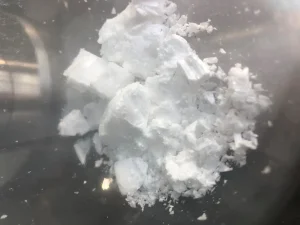
High-Quality Thymosin Alpha 1 62304-98-7 - Premium Immune Enhancer from China Suppliers
Explore Product Specifications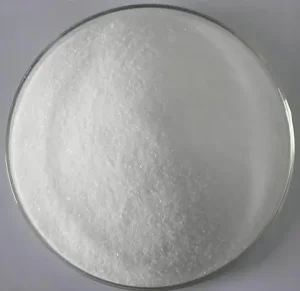
High-Quality Linaclotide CAS NO: 851199-59-2 Manufacturers, Quotes
Explore Product Specifications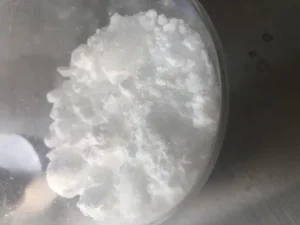
Custom Teduglutide CAS NO: 287714-30-1 - Quality Suppliers and Factory in China for Short Bowel Syndrome
Explore Product Specifications
Custom Dulaglutide CAS NO:923950-08-7 Manufacturers, Service
Explore Product Specifications
High-Quality Mots-C Peptide (CAS: 1627580-64) - China Suppliers & Factory for Metabolism Regulation
Explore Product Specifications
Custom Dulaglutide CAS 923950-08-7 - Leading China Suppliers and Reliable Factory for High-Quality Production
Explore Product Specifications
High-Quality Copper tripeptide/GHK-CU CAS:89030-95-5 Manufacturers, Service
Explore Product Specifications
High-Quality Semax Peptide 80714-61-0 - Leading China Suppliers and Factory for Nootropics
Explore Product SpecificationsDelta Sleep Inducing Peptide (DSIP): Physicochemical Foundations
Delta Sleep-Inducing Peptide (DSIP) is a natural nonapeptide initially isolated in 1977 from the venous cerebral blood of rabbits in electrically induced slow-wave sleep. With the primary amino acid sequence Trp-Ala-Gly-Gly-Asp-Ala-Ser-Gly-Glu, it serves as an essential regulatory neuromodulator of the central nervous system.
Sequence & Structural Purity
DSIP comprises nine L-amino acid residues (molecular formula: C35H48N10O15, exact molecular mass: 848.81 Da). The presence of the N-terminal tryptophan and C-terminal glutamic acid necessitates stringent solid-phase coupling protocols to eliminate truncated [des-Trp1] impurities and avoid aspartyl rearrangement.
- Sequence: H-Trp-Ala-Gly-Gly-Asp-Ala-Ser-Gly-Glu-OH
- CAS Registry Number: 62568-57-4
- HPLC Optical Purity: ≥ 98.0% - 99.5%
Mechanistic Neurobiology
Unlike sedative-hypnotic small molecules (e.g., benzodiazepines, Z-drugs) that force GABAA receptor allosteric transitions, DSIP functions as an endogenous neuromodulator. It amplifies low-frequency delta electroencephalogram (EEG) wave oscillations (0.5–4 Hz) without suppressing physiologic REM cycles.
- Slow-wave sleep (SWS) induction
- Zero habituation or receptor desensitization
- Preserved natural sleep architecture
Endocrine & HPA Axis Buffering
Scientific literature corroborates that DSIP exerts systemic neuroprotective and antioxidant functions by re-equilibrating the hypothalamic-pituitary-adrenal (HPA) axis. It suppresses elevated basal corticotropin-releasing factor (CRF) and modulates luteinizing hormone (LH) and somatotropin pulses under chronic oxidative stress.
- Down-regulates stress-induced cortisol
- Free radical scavenging & membrane stability
- Mitigates autonomic hyper-reactivity
| Analytical Parameter | Pharmacopeial / Manufacturer Specification | Methodology / Analytical Instrument |
|---|---|---|
| Chemical Characterization | H-Trp-Ala-Gly-Gly-Asp-Ala-Ser-Gly-Glu-OH (Acetate / TFA / HCl Salt) | LC-MS Electrospray Ionization (ESI-MS) / High-Res MS |
| Chromatographic Purity (Area %) | ≥ 98.5% (Analytical Grade), ≥ 99.2% (Commercial Pre-Formulation) | Reversed-Phase HPLC (C18 Column, UV detection at 220 nm & 280 nm) |
| Peptide Content (N Content) | ≥ 80.0% to 85.0% (Net peptide basis) | Elemental Analysis / Quantitative Amino Acid Analysis (AAA) |
| Residual Solvents & Counter-Ions | Acetonitrile < 410 ppm, Dichloromethane < 600 ppm, DMF < 880 ppm | Headspace Gas Chromatography (HS-GC-FID) |
| Bacterial Endotoxin Levels | < 5.0 EU/mg (Custom Lyophilized Aseptic Grades < 0.5 EU/mg) | Kinetic Turbidimetric Limulus Amebocyte Lysate (LAL) Testing |
| Appearance & Solubility | Sterile, lyophilized white to off-white cake/powder; Soluble in water ≥ 10 mg/mL | Visual Inspection & Turbidimetric Dissolution Clearance |
Why Global Pharma Sources DSIP from Thinheal's Chinese Factory
Combining deep chemical engineering traditions with automated multi-ton peptide synthesis suites, our Hangzhou industrial park offers international enterprises unparalleled cost-efficiency, strict quality assurance, and zero-disruption continuity.
Vertical Upstream Integration
Thinheal synthesizes its own Fmoc-protected amino acids (including stereochemically pure Fmoc-Trp(Boc)-OH and Fmoc-Asp(OtBu)-OH), coupling reagents (HBTU, HATU, DIC/OxymaPure), and specialized Wang/CTC resins in-house. This shields our clients from third-party raw material price surges and guarantees raw material traceability from crude reagent to finished peptide vial.
Automated Multi-Ton Synthetic Suites
We operate 500L to 3000L solid-phase reaction vessels equipped with real-time UV spectrophotometric deprotection monitoring. Through optimized solvent cycles (reducing DMF/NMP consumption by 42%) and automated cleavage protocols, our factory produces DSIP in single batch sizes exceeding 50 kg without compromising chiral integrity or yield.
Ion Exchange & Lyophilization Mastery
Trifluoroacetic acid (TFA) residues can lead to cytotoxicity in sensitive biological models and pharmaceutical formulations. Thinheal provides automated preparative ion-exchange chromatography systems that replace TFA counter-ions with acetate or hydrochloride salts, achieving residual TFA levels of < 0.1% or non-detectable under strict ion-chromatography analysis.
Emerging Trends in Neuropeptide Therapeutics & Chronobiology
As the global healthcare sector pivots toward non-narcotic neurological agents and targeted peptide therapeutics, Delta Sleep-Inducing Peptide is experiencing unprecedented demand across pharmaceutical, clinical research, and anti-aging biotech industries.
Non-Addictive Sleep Therapeutics
Traditional hypnotics face growing regulatory scrutiny due to dependence risks, cognitive dulling, and motor impairment. DSIP's unique sleep-modulating rather than sleep-forcing action makes it a prime candidate for next-generation circadian rhythm restorers without tolerance buildup.
Neuro-Immune Cross-Talk
Modern clinical research reveals profound interconnectivity between slow-wave delta sleep and the brain's glymphatic clearance system. Deep delta sleep triggers cerebrospinal fluid influx, clearing amyloid-beta and tau aggregates—positioning DSIP in pioneering neurodegenerative prevention pipelines.
Substance Withdrawal & Stress Recovery
Preclinical studies in European and Asian institutions demonstrate that DSIP attenuates vegetative and emotional distress during opioid and alcohol withdrawal syndromes. Its regulatory influence on the central adrenergic system reduces tremors, hyperhidrosis, and anxiety rebound.
Green Peptide Chemistry
Environmental compliance has reshaped Chinese chemical manufacturing. Thinheal leads the industry by implementing greener SPPS methods—substituting hazardous solvents with 2-MeTHF and Cyrene, alongside solvent recovery rates exceeding 90% in our Hangzhou facilities.
Strategic Industry Perspective: "Global demand for high-purity regulatory neuropeptides is anticipated to expand at a compound annual growth rate (CAGR) of 8.4% through 2032. Thinheal's direct factory infrastructure eliminates supply chain volatility, providing clients with an uncompromised path from exploratory pre-formulation to commercial batch release."
Localized Research Scenarios & Formulation Engineering
Thinheal supports diverse downstream delivery modalities, providing customized particle size reduction, sterility validation, and salt conversions tailored to institutional research and commercial formulations.
Sublingual & Intranasal Formulations
Because intact peptides are subject to gastric enzymatic degradation, intranasal and sublingual delivery routes offer direct mucosal absorption bypassing first-pass hepatic metabolism. Thinheal engineers micronized lyophilized DSIP powders with tailored aerodynamic diameter (MMAD < 5 µm) to optimize nasal delivery and blood-brain barrier permeation.
Preclinical Behavioral & EEG Research
Academic institutes, CROs, and university laboratories require precise, ultra-low endotoxin DSIP (< 0.1 EU/mg) to prevent non-specific pyrogenic reactions or cytokine spikes in animal models. Every batch is certified with complete 1H-NMR, 13C-NMR, LC-MS, and analytical RP-HPLC traces for publication-grade integrity.
Sterile Injectable Grade Preparations
For parenteral development, our cleanrooms (Class 100 / ISO 5 laminar air flow hoods) carry out aseptic liquid filtration (0.22 µm PVDF membranes) and lyophilization in Type I borosilicate glass vials with chlorobutyl rubber stoppers, securing stability across long-term international cold chains.
End-to-End DSIP Contract Manufacturing Workflow
From early sequence confirmation and pilot process qualification to industrial-scale synthesis, release testing, and global temperature-controlled distribution.
Technical Scoping & Specification
Alignment on target purity (≥98% or ≥99%), counter-ion preference (Acetate/HCl/TFA), batch quantity (grams to kilograms), and customized vial or bulk powder packaging specifications.
Automated SPPS & Purification
Stepwise microwave-assisted coupling, cleavage under scavengers (EDT/TIS), and dual-stage preparative reversed-phase HPLC purification with automated fraction collection.
Analytical Release Testing
Comprehensive multi-point analytical release: MS molecular mass confirmation, HPLC purity, residual solvent GC testing, endotoxin quantification, moisture content (Karl Fischer), and heavy metal analysis.
Global Cold-Chain Logistics
Packaging with temperature data-loggers, insulated cold containers, and dedicated customs clearance documentation ensuring door-to-door delivery across North America, Europe, Asia, and the Middle East.
Frequently Asked Questions on DSIP Synthesis & Procurement
Clear, direct technical responses addressing quality control, synthesis specifications, and international trade compliance.
What is Delta Sleep-Inducing Peptide (DSIP) and what is its chemical sequence?
DSIP is an endogenous regulatory nonapeptide with the sequence H-Trp-Ala-Gly-Gly-Asp-Ala-Ser-Gly-Glu-OH (CAS Number: 62568-57-4, Molecular Formula: C35H48N10O15, Molecular Weight: 848.81 g/mol). It promotes slow-wave delta sleep rhythms without inducing sedation or pharmacological receptor desensitization.
How does Thinheal prevent degradation and oxidation during DSIP synthesis?
The N-terminal tryptophan residue is prone to oxidative breakdown (kynurenine formation) and alkylation during trifluoroacetic acid (TFA) cleavage. Thinheal incorporates specialized cation scavengers (such as triisopropylsilane and 1,2-ethanedithiol) under an inert nitrogen blanket, followed by immediate flash-lyophilization to retain complete structural and optical purity.
Can Thinheal supply custom DSIP with non-TFA salts, such as acetate or hydrochloride?
Yes. While standard crude cleavage yields TFA salts, Thinheal operates preparative ion-exchange columns capable of converting DSIP into pharmaceutical-grade acetate (AcO-) or hydrochloride (Cl-) salts, guaranteeing residual TFA levels below 0.1% or non-detectable by ion-chromatography (IC).
What is Thinheal's batch capacity for custom DSIP manufacturing?
Thinheal operates an R&D center and an industrial-scale manufacturing plant in Hangzhou, China. Our chemical synthesis capacity has achieved multi-ton scale annually. For DSIP, we seamlessly handle requests ranging from 10-gram exploratory research pilot batches up to 50-kilogram commercial production campaigns.
What analytical documentation accompanies each DSIP delivery?
Every commercial and research shipment includes an official Certificate of Analysis (CoA) featuring HPLC chromatograms (determining optical and chemical purity), ESI-MS spectra (molecular weight verification), residual moisture (Karl Fischer), amino acid analysis (AAA), residual solvent gas chromatography, and bacterial endotoxin test results.
How are international cold-chain shipments protected against thermal degradation?
Lyophilized DSIP is hermetically sealed in nitrogen-purged amber glass vials or heat-sealed multi-barrier aluminum pouches. Shipments are packed with temperature-regulating blue ice gel packs or dry ice blocks in reinforced polyurethane containers, accompanied by digital USB temperature dataloggers that record transit conditions continuously.
Advanced Therapeutic APIs & Regulatory Peptides
In addition to DSIP neuropeptides, Thinheal manufactures an extensive catalog of incretin dual agonists, cardiovascular blockers, and hormonal analogs for global B2B procurement.
High-Quality Mazdutide CAS NO: 2259884-03-0 Manufacturers, Pricelist
Explore Product Specifications
High-Quality Eptifibatide CAS 188627-80-7 - China Suppliers for Platelet Aggregation Inhibition
Explore Product Specifications
High-Quality Mazdutide CAS 2259884-03-0: Dual GCG/GLP-1 Agonist for Weight Loss Manufacturer
Explore Product Specifications
Custom Selank Peptide CAS 129954-34-3 - China Suppliers for Anxiety Relief & Neuroprotection
Explore Product Specifications
High-Quality Thymosin β4 acetate (TB500) CAS: 77591-33-4 Quotes, Pricelist
Explore Product Specifications
High-Quality Thymalin CAS:63958-90-7 Manufacturers, Quotes
Explore Product Specifications
High-Quality Deslorelin CAS 57773-65-6 - Premium China Factory for GnRH Analog Hormone Products
Explore Product Specifications
Custom Triptorelin CAS 57773-63-4 - China Suppliers & Factory for Sustained Release Formulations
Explore Product SpecificationsPartner with an Established Peptide Manufacturer in China
Connect with our technical peptide chemists and commercial directors to request a customized quotation, schedule an audit, or receive our complete comprehensive peptide library catalog.