
High-Purity Verified Peptide APIs & Formulations
Verified synthetic purity, documented batch consistency, and global regulatory compliance for clinical and commercial scaling.
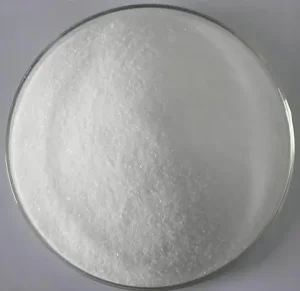
High-Quality Survodutide CAS 2805997-46-8 - Premium China Suppliers & Factory for High-Quality Peptides Quotes, Pricelist
Request Sourcing Quote
High-Quality Survodutide CAS: 2805997-46-8 from China Suppliers - Quality Products from Trusted Factory Manufacturer, Quotes
Request Sourcing Quote
Custom Triptorelin CAS 57773-63-4 - China Suppliers and Factory for GnRH Agonist with Sustained Release Formulations Manufacturer, Pricelist
Request Sourcing Quote
High-Quality Thymosin Alpha 1 62304-98-7 - Premium Immune Enhancer from Trusted China Suppliers and Factory Pricelist, Service
Request Sourcing Quote
Custom Dulaglutide CAS NO:923950-08-7 Manufacturers, Service
Request Sourcing Quote
High-Quality Teduglutide CAS NO: 287714-30-1 Manufacturer, Service
Request Sourcing Quote
High-Quality Orforglipron CAS NO: 2212020-52-3 Quotes, Service
Request Sourcing Quote
High-Quality China Orforglipron CAS 2212020-52-3 - Leading Suppliers and Factory for Quality Pharmaceuticals Pricelist, Service
Request Sourcing QuoteAnnual Synthetic Polypeptide Yield
Synthesis Process Architecture Expertise
UPLC Finished Product Chemical Purity
Global Regulatory & Technical Coverage
Macro Trends & Industrial Paradigms in Peptide Automation
The global therapeutics landscape is undergoing a systemic structural pivot driven by complex macrocyclic peptides, dual/triple incretin agonists (GLP-1/GIP/Glucagon), and therapeutic neoantigens requiring radical innovation in Solid Phase Peptide Synthesizers (SPPS).
The Scalability Bottleneck in Incretin APIs
The global surge in multi-receptor metabolic drugs has exerted unprecedented strain on chemical peptide production networks. Traditional batch reactors encounter critical mass-transfer limitations, fluidization channeling, and aggregation kinetics over sequences exceeding 30 amino acids. Next-generation automated synthesizers integrate dynamic acoustic oscillation and variable-volume axial beds to maintain coupling efficiencies above 99.4% even at 500-liter solid-phase bed scales.
Greener Synthesis & Solvent Economy
Modern ESG compliance mandates drastically reduce hazardous solvent profiles such as N,N-Dimethylformamide (DMF) and N-Methyl-2-pyrrolidone (NMP). Contemporary synthesizers integrate precision solvent recycling and are engineered to accommodate green alternatives like 2-Methyltetrahydrofuran (2-MeTHF) and Cyrene™. High-precision metering reduce washing cycle volumes by up to 48%, significantly decreasing process mass intensity (PMI).
Continuous Flow vs. Large-Scale Solid Phase
While continuous-flow microfluidics excel for rapid short-chain discovery, large-scale commercial pipelines rely predominantly on automated custom Solid Phase Peptide Synthesizers. Engineered with explosion-proof (ATEX/IECEx) containment, pneumatic-driven nitrogen agitation, and PAT real-time UV/NIR monitoring, modern SPPS setups resolve racemization issues during difficult couplings while preserving multi-kilogram to metric-ton production feasibility.
Custom Solid Phase Peptide Synthesizers Specification & Pricelist
Comparative benchmarks for R&D screening, pilot-scale process development, and industrial multi-ton cGMP production platforms.
| Synthesizer Model/Tier | Reactor Vessel Scale | Throughput Capacity | PAT Real-Time Analytics | Automation Standard | Indicative Price Range |
|---|---|---|---|---|---|
| Benchtop R&D Discovery SPPS | 5 mL – 100 mL | 0.05 – 5 mmol / batch | In-line UV Deprotection Monitoring | Fully Automated, Benchtop Control | $45,000 – $85,000 |
| Preclinical Pilot SPPS-20X | 500 mL – 10 L | 50 mmol – 0.5 mol / batch | Dual UV-Vis, Temp/Conductivity Feedback | 21 CFR Part 11 Electronic Records | $140,000 – $280,000 |
| Industrial cGMP Production SPPS | 50 L – 500 L | 1 kg – 25 kg / batch cycle | Near-Infrared (NIR) & Automated Mass Flow | DCS/SCADA Automated Recipe Handling | $450,000 – $1,200,000+ |
| Custom Integrated CDMO Synthesis Array | Multi-Reactor (Customizable) | Multi-Ton Annual Equivalent | Process Analytical Technology (PAT) Closed-Loop | Distributed Control System with ATEX Class 1, Div 1 | Custom Quote / Project Scope |
*Final quotations reflect user-specific configurations, validation documentation packages (IQ/OQ/PQ), ATEX safety compliance, and solvent recovery subsystems.
Global Engineering, Regionalized Compliance & QA Protocols
Ensuring complete risk elimination across clinical documentation, regulatory inspections, and real-time localized maintenance engineering.
cGMP & FDA/NMPA/EMA Alignment
Every commercial system is certified to comply strictly with 21 CFR Part 11 regulations for data integrity, featuring multi-tiered audit trails, encrypted electronic signatures, and computerized system validation protocols. This ensures smooth tech-transfer whether submitting generic DMF files, US FDA IND dossiers, or EU EMA clinical applications.
- Comprehensive IQ/OQ/PQ qualification dossiers
- Traceable sanitary 316L stainless steel & Hastelloy-C metallurgy
- FDA compliant seals, Kalrez O-rings, and inert PTFE flow paths
Dedicated International Desks
Our localized engineering desks bridge geographic, timezone, and communicative gaps. Whether navigating US validation standards, European customs logistics, or regional safety approvals, our multidisciplinary teams ensure rapid response times, tailored technical onboarding, and localized component warehousing.
- Americas & European specialized project desk
- Russia, CIS, and Continental European desk
- Asia, Middle East, and East Asian operations
Complete Life-Cycle Technical Maintenance
From initial design requirement specifications (URS) down through on-site installation, operational qualification, and preventative maintenance cycles. Our automated SPPS units integrate remote IoT telemetry and automated valve health diagnostics, preventing unscheduled downtime during critical elongation steps.
- Rapid dispatch of OEM precision valves & optical modules
- Custom automated software upgrades and firmware hardening
- Comprehensive training for client QA and plant technicians
Diverse Applications: From Therapeutic APIs to Bioactive Peptides
Custom SPPS systems are engineered to navigate distinct thermodynamic, mechanical, and stereochemical hurdles across therapeutic classes.
Incretin & Metabolic Hormones
Complex 30+ mer GLP-1/GLP-2 and glucagon analogues (such as Semaglutide, Teduglutide, Dulaglutide, and Mazdutide) suffer from secondary structure formation (beta-sheet aggregation) during elongation. Custom synthesizers feature automated heating zones (30°C – 60°C) and real-time deprotection tracing to guarantee complete deprotection without racemizing sensitive histidine or cysteine linkages.
Immune & Oncology Therapeutics
For bioactive molecules like Thymosin Alpha 1, Triptorelin, and Deslorelin, exact stoichiometric coupling minimizes deletion peptides that are notoriously difficult to resolve during preparative HPLC purification. Advanced digital SPPS platforms feature micro-metered monomer delivery that guarantees enantiomeric retention and uniform batch-to-batch chromatographic profiles.
Cosmetic & Dermal Regenerative Peptides
High-volume commercial active ingredients like BPC-157, signal peptides, copper peptide matrices, and anti-aging oligopeptides require aggressive unit economics. High-capacity, multi-ton automated solid phase systems drastically lower raw coupling agent overhead, enabling industrial-scale supply of skin-care bioactives with maximum gross margins.
Engineering Roadmap: The Next Decade in Peptide Synthesizers
Strategic advancements pioneering automated peptide synthesizers over the next regulatory and technological lifecycle.
AI-Predictive Reaction Kinetics
Integration of machine learning algorithms trained on historical deprotection trajectories to calculate ideal residence times, minimizing coupling reagent waste and eliminating deletion contaminants dynamically.
Closed-Loop PAT Integration
Implementation of real-time mass spectrometry (MS) and dual-frequency optical detectors directly in-line with the reactor loop, delivering autonomous stop-flow triggers when coupling reaches 99.9% completeness.
Zero-Effluent Green Synthesizers
Fully enclosed, zero-volatile-emission architecture equipped with high-efficiency vacuum-assisted solvent separation, allowing complete closed-cycle regeneration of eco-benign solvents on the factory floor.
Modular Multi-Ton Expansion
Standardized, explosion-proof modular synthesis cells capable of parallel array deployment, scaling up from development quantities to multi-ton bulk API production with near-zero tech-transfer friction.
Accelerate Your Commercial Peptide Industrialization
Consult with our process engineers to request detailed hardware specifications, batch yield models, or an institutional custom synthesizer quotation.
High-Purity Therapeutic Peptides & Active Ingredients
Scalable, chemically synthesized compounds backed by robust validation, batch COAs, and comprehensive analytical documentation.
Custom Mots-C CAS: 1627580-64-6 Pricelist, Service
Request Sourcing Quote
High-Quality Triptorelin CAS:57773-63-4 Quotes, Service
Request Sourcing Quote
High-Quality Teduglutide CAS NO: 287714-30-1 - China Suppliers & Factory for Short Bowel Syndrome Treatment Manufacturer, Service
Request Sourcing Quote
Custom Triptorelin CAS 57773-63-4 - China Suppliers & Factory for Synthetic GnRH Agonist with Sustained Release Formulations Pricelist, Service
Request Sourcing Quote
Custom Mazdutide CAS 2259884-03-0: Top China Suppliers and Factory for Dual GCG/GLP-1 Agonist for Weight Loss Manufacturer, Quotes
Request Sourcing Quote
Custom Semaglutide CAS NO: 910463-68-2 Manufacturer, Manufacturers
Request Sourcing Quote
Custom BPC-157 CAS:137525-51-0 - China Suppliers and Factory for Tissue Repair and Regeneration Manufacturers, Quotes
Request Sourcing Quote
Custom Deslorelin CAS: 57773-65-6 Manufacturer, Manufacturers
Request Sourcing QuoteFrequently Asked Questions: Sourcing & Engineering
In-depth responses covering process economics, engineering validation, mechanical reliability, and tech-transfer frameworks.
How do custom Solid Phase Peptide Synthesizers overcome beta-sheet aggregation during long-chain synthesis?
Long sequences, such as GLP-1 and GLP-2 analogues exceeding 30 residues, are vulnerable to inter-chain hydrophobic stacking and beta-sheet aggregation, causing truncated sequences and drastically reduced yields. Advanced automated SPPS units manage this by coupling precise thermal control (35°C – 65°C) with dynamic high-velocity acoustic mixing and optimized resin swelling management. Furthermore, our automated delivery scripts accommodate pseudoproline dipeptides and backbone-protecting reagents at known aggregation hotspots, maintaining coupling efficiencies above 99.4% through to the final residue.
What is the typical timeline and engineering scope from quotation to on-site commissioning?
Standardized discovery and pilot synthesizers (500 mL – 10 L) can typically be delivered and commissioned within 8 to 12 weeks. Fully customized industrial installations (50 L – 500 L+ multi-ton capacity) require a structured 16 to 24-week engineering lifecycle. This window encompasses detailed User Requirements Specification (URS) alignment, customized P&ID layout generation, 316L/Hastelloy fabrication, explosion-proof ATEX/IECEx certification, 21 CFR Part 11 automation programming, Factory Acceptance Testing (FAT), followed by on-site Site Acceptance Testing (SAT) and complete IQ/OQ validation.
What documentation and analytical validation are supplied for regulatory filings?
Every industrial synthesis platform is backed by full material traceability reports (mill certs for 316L/Hastelloy and USP Class VI biocompatibility certificates for PTFE/perfluoroelastomer seals). Our cGMP validation documentation package contains complete functional design specifications, electrical and instrumentation P&IDs, hardware/software IQ/OQ protocols, computerized system validation (CSV) dossiers adhering strictly to GAMP 5 standards, and comprehensive audit trail verification data ready for FDA, EMA, or NMPA inspection.
Can custom synthesizers be configured for green chemistry solvents (Cyrene, 2-MeTHF)?
Yes. As environmental requirements around DMF, NMP, and DCM tighten under REACH and global green chemistry frameworks, our fluidic manifolds can be configured specifically for higher-viscosity or chemically aggressive green solvents. Our engineers utilize specialized fluidic pathways, heated reagent loops, and high-torque seal assemblies to ensure dependable fluid delivery and swelling kinetics when working with greener alternatives like 2-MeTHF, cyclopentyl methyl ether (CPME), and bio-based Cyrene™.
How does Thinheal support both custom equipment supply and external API CDMO manufacturing?
Thinheal operates an integrated industrialization ecosystem. Clients can either deploy our proven custom solid phase synthesis systems directly within their own facilities or utilize our in-house multi-ton chemical synthesis infrastructure via contract CDMO models. This dual capability allows partners to de-risk development: we can optimize synthetic routes and validate scale-up kinetics in-house before managing technology transfer directly into client facilities, supported by our regional engineering desks.