
2026 Top Injecting Sermorelin Safety FAQs for Global Buyers?

Time:2026-10-27 Author:Isabella
0%

For global buyers, Injecting Sermorelin raises practical questions about sourcing, storage, clinical supervision, and patient safety. This 2026 safety FAQ introduction examines those concerns through a healthcare-focused lens. Sermorelin is a prescription medicine in some markets, while availability and oversight may differ elsewhere. Local regulations matter.

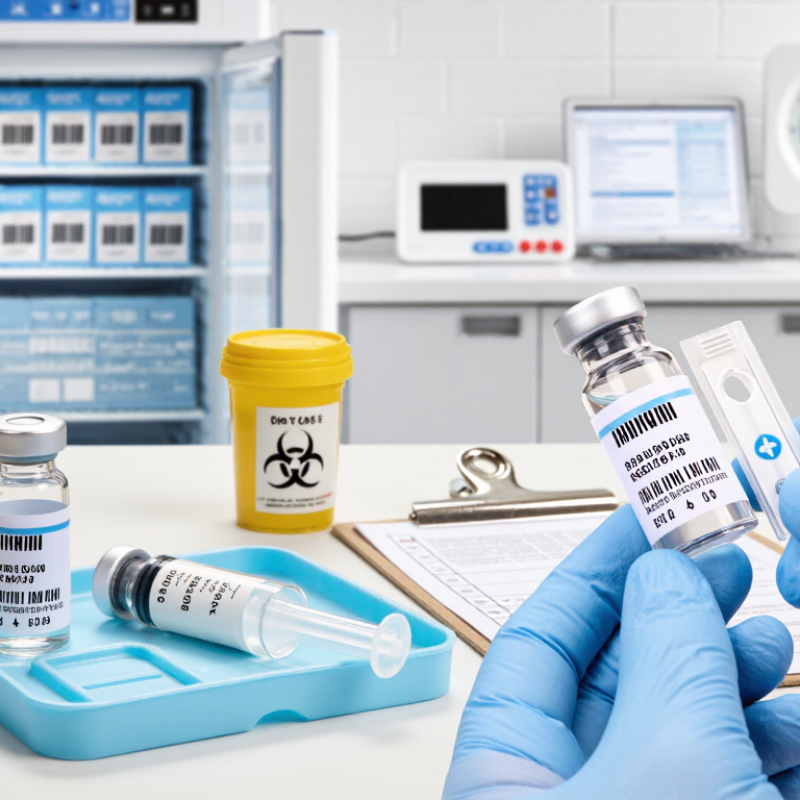
Safety begins before the injection. A qualified healthcare professional should confirm the product’s identity, prescription status, medical suitability, and intended use. Buyers should check sealed packaging, batch information, expiration dates, and temperature-control records. A warm delivery box can be a warning sign. So can unclear labeling. Counterfeit or improperly stored products may create risks that are difficult to detect visually.

The discussion also covers injection preparation, hygiene, needle disposal, possible adverse effects, and when urgent medical care may be needed. Children, pregnant individuals, people with endocrine disorders, and patients using other hormone-related treatments may require special assessment. Individual responses can vary. Evidence and regulatory guidance may also change over time. That deserves caution.

This guide does not replace a licensed clinician, pharmacist, or national regulator. It cannot confirm whether sermorelin is appropriate for a specific person. Buyers should obtain independent medical advice before purchase or use, especially when ordering across borders. Some recommendations may remain imperfect because international supply chains and policies are not uniform. Responsible decisions require verified information, documented products, and ongoing medical monitoring.
2026 Top Injecting Sermorelin Safety FAQs for Global Buyers?

Sermorelin Pharmacology: GHRH Signaling and Its 10–20-Minute Half-Life

Sermorelin is a synthetic analogue of growth hormone–releasing hormone (GHRH). After injection, it binds to GHRH receptors in the pituitary gland. This signals the body to release its own growth hormone, rather than supplying growth hormone directly.

Its plasma half-life is short, commonly reported at about 10–20 minutes. That does not mean its biological signal ends immediately. Receptor activity can continue after blood levels decline. The resulting growth hormone pulse may influence insulin-like growth factor 1, sleep patterns, and tissue repair. Responses vary widely. Age, pituitary function, nutrition, sleep, and dosing timing all matter.

What safety questions deserve attention? Injection-site redness, headache, flushing, dizziness, and temporary changes in glucose control may occur. Persistent swelling or severe symptoms require medical review. People with diabetes, active cancer, endocrine disorders, or pregnancy concerns should seek specialist advice before use. Sterile technique matters. So does verified storage temperature.

A short half-life can sound reassuring, but it does not remove risk. Product quality, concentration accuracy, and contamination remain practical concerns. I would not treat online dosage charts as medical guidance; they often ignore laboratory results and personal history. Buyers in different countries should confirm local prescribing rules and use a licensed medical channel. There is no reliable shortcut around clinical assessment.

FDA Geref Data: Historical 0.2–0.3 mg/m² Subcutaneous Trial Doses

For global buyers, historical U.S. regulatory materials linked to sermorelin describe subcutaneous trial doses around 0.2–0.3 mg/m². The unit matters: mg/m² uses body-surface area, not body weight. These figures came from controlled research settings. They are not a modern self-injection schedule.

Small numbers can mislead. A dose calculated for one patient may not suit another patient’s age, diagnosis, growth pattern, or medical history. Injection technique also affects safety. Clinicians usually confirm the product’s concentration, syringe markings, storage conditions, and administration route before treatment. Never convert a historical trial dose without professional calculation.

Quality checks are equally important for international purchases. Buyers should request current regulatory documentation, a complete ingredient list, lot identification, sterility information, and temperature-control records. Online sellers may provide impressive certificates that are incomplete or difficult to verify. That warning deserves attention. Adverse effects can include injection-site reactions, headache, flushing, dizziness, or changes in glucose control. Children and adults with endocrine disorders require different assessments. Historical evidence can guide questions, but it cannot replace diagnosis, prescribing authority, or follow-up testing. My own reading of older dosing reports leaves one limitation clear: the context around each dose is often less visible than the number itself.

2026 Top Injecting Sermorelin Safety FAQs for Global Buyers

Historical dose reference: 0.2–0.3 mg/m² administered subcutaneously in historical clinical-trial data. The chart converts this reported body-surface-area dose range into total milligrams for representative body-surface-area values.

Important: These calculations are historical references, not a current prescribing recommendation, approved self-injection guidance, or a substitute for medical supervision. Actual use depends on the applicable regulatory status, formulation, patient factors, and qualified clinical advice.

Injection Safety: USP Sterility, Aseptic Technique, and 2–8°C Cold Chain

2026 Top Injecting Sermorelin Safety FAQs for Global Buyers

Injection safety begins with verified sterility, not attractive packaging. Buyers should request current lot information, expiry dates, storage instructions, and documentation from an authorized source. USP sterility requirements can support quality control, but a sterility test cannot guarantee that every vial remains safe after testing.

Aseptic technique matters at every step. Trained healthcare professionals should inspect the vial, packaging, and solution before preparation. They should use clean gloves, a disinfected workspace, new sterile supplies, and approved handling procedures. Touching a stopper or needle can introduce contamination. Small errors matter.

Cold chain is another practical concern. Sermorelin products requiring refrigeration should generally remain between 2–8°C, according to approved product instructions. They should not be frozen, overheated, or left in direct sunlight. Temperature-monitoring data can help confirm suitable transport conditions. A damaged package or unclear temperature history deserves investigation before use.

Not every international shipment receives consistent handling. That remains an uncomfortable reality. Buyers should confirm local import rules and use qualified medical channels. Patients should never prepare or inject prescription products without professional guidance. Even experienced teams can miss a detail, so procedures need review, documentation, and honest reporting when something goes wrong.

2026 Top Injecting Sermorelin Safety FAQs for Global Buyers? — Injection Safety: USP Sterility, Aseptic Technique, and 2–8°C Cold Chain
No. Safety Dimension Frequently Asked Question Evidence-Based Answer Buyer Action
1 Regulatory status Is every sermorelin injection product approved for human use? No. Regulatory status depends on the country, product, formulation, and supply channel. A compounded preparation is not automatically equivalent to an authority-approved commercial medicine. Buyers should verify the legal status, prescription requirements, and dispensing source in the destination country. Request the official product documentation and confirm local legality before purchase.
2 Sterility assurance Does a clear solution prove that the injection is sterile? No. Appearance cannot confirm sterility, potency, endotoxin control, or absence of particulate contamination. Sterility requires validated manufacturing, appropriate environmental controls, qualified personnel, and documented testing. Do not use a vial solely because it looks clear.
3 USP-related controls What should “USP sterility” mean in a purchasing review? Relevant United States Pharmacopeia requirements may include sterile compounding controls, microbial contamination control, bacterial endotoxin control, sterilizing processes, container-closure integrity, and storage requirements. A general reference to “USP” is not proof of compliance; the applicable standard and supporting records should be identified. Ask for the applicable standard, lot-specific release documentation, and storage instructions.
4 Manufacturing quality Which quality records are important for an injectable peptide? Useful records may include a certificate of analysis, lot or batch number, manufacture date, expiry or beyond-use date, sterility result, endotoxin result where applicable, assay or identity information, and documented storage conditions. Records should be traceable to the exact container supplied. Check that every document matches the vial label and shipment lot.
5 Aseptic preparation What is the safest basic approach before withdrawing a dose? Use clean hands, a clean preparation area, a new sterile syringe and needle, and a disinfected vial stopper. Allow the stopper to dry after applying an appropriate alcohol swab. Avoid touching sterile connection points, never reuse needles or syringes, and follow the prescriber’s or pharmacist’s instructions. Use a trained healthcare professional whenever possible.
6 Vial access Can a needle be left in a vial for later doses? No. Leaving a needle in a vial can compromise sterility and increase the risk of contamination, leakage, coring, and dosing errors. A new sterile needle and syringe should be used for each access unless the product instructions and applicable practice standards specifically state otherwise. Never store a vial with a needle inserted.
7 Single-dose versus multidose use How should single-dose and multidose containers be treated? A single-dose container is intended for one patient and one use unless authorized instructions state otherwise. A multidose container must be handled according to its label, pharmacy directions, and applicable beyond-use requirements. Refrigeration does not restore sterility after contamination. Follow the exact label and pharmacy instructions; do not extend use dates yourself.
8 Reconstitution Is bacteriostatic water automatically suitable for reconstituting sermorelin? No. The diluent, volume, compatibility, and reconstitution method must be specified by the prescriber, pharmacist, or authorized product instructions. An unsuitable diluent or incorrect technique can affect sterility, concentration, stability, and patient safety. Do not select or substitute a diluent without professional guidance.
9 Cold-chain range Should sermorelin always be stored at 2–8°C? Many refrigerated injectable preparations are labeled for 2–8°C, but the correct range is product-specific. The approved label or dispensing pharmacy instructions control. A stated temperature range should include documented monitoring rather than an assumption based on the peptide name alone. Verify the labeled storage range before shipment and before use.
10 Temperature excursion What should be done if the package becomes warm or freezes? Do not use the product until a pharmacist or responsible quality professional evaluates the excursion against the product’s stability data. Freezing may damage some formulations, and a short visual inspection cannot establish that the product remains safe or potent. Quarantine the container and document time, temperature, and duration.
11 International shipping What does a reliable cold-chain shipment generally require? It should use suitable insulated packaging, validated or qualified coolant placement, a temperature indicator or data logger when appropriate, secure secondary containment, and delivery timing that supports the labeled storage conditions. Customs delays and weekend storage should be considered. Request shipment temperature records and an excursion-management procedure.
12 Receipt inspection What should global buyers inspect on arrival? Check the outer package for damage or leakage; verify the product name, strength, lot number, expiry or beyond-use date, storage statement, tamper evidence, and container integrity. Inspect for particles, unexpected discoloration, cracks, damaged seals, or an unexplained change in appearance. Photograph the package and isolate any questionable container before contacting the supplier or pharmacist.
13 Storage practice Where should a refrigerated vial be stored? Store it in the original labeled packaging in a monitored refrigerator, away from the freezer compartment and away from the refrigerator door where temperature fluctuations are greater. Protect it from light when required by the label, and keep it inaccessible to children. Use a calibrated temperature monitor and record excursions.
14 Beyond-use dating Can the product be used until the printed date after reconstitution? Not necessarily. Reconstitution can create a different stability period. The post-reconstitution beyond-use date, storage condition, and discard instruction must come from the dispensing pharmacy, authorized labeling, or validated stability information. Write the reconstitution date and discard date on the container when instructed.
15 Needle and syringe safety Can injection equipment be reused for the same person? No. Needles and syringes are sterile single-use devices. Reuse increases the risk of contamination, infection, needlestick injury, and inaccurate dosing. Dispose of used sharps immediately in an approved sharps container.
16 Injection-site monitoring Which local reactions require attention? Mild short-lived soreness or redness can occur after an injection, but worsening pain, spreading redness, warmth, swelling, pus, fever, or red streaking may indicate infection or another complication and requires prompt medical assessment. Seek professional care promptly if symptoms worsen or persist.
17 Allergic reaction When is urgent medical help required? Breathing difficulty, facial or throat swelling, widespread hives, fainting, severe dizziness, or rapidly progressing symptoms may indicate a serious allergic reaction. These symptoms require emergency medical attention. Use local emergency services immediately for severe symptoms.
18 Patient-specific suitability Can international buyers determine suitability from online information alone? No. Appropriate use depends on medical history, diagnosis, age, concurrent medicines, formulation, dose, and monitoring needs. Product quality and patient suitability are separate questions. Obtain an evaluation and prescription from a licensed healthcare professional in the relevant jurisdiction.
Safety note: This table is for procurement and handling education only. It does not replace the product label, a licensed prescriber, pharmacist, qualified sterile-compounding professional, or local regulatory requirements. Do not inject any preparation with uncertain identity, sterility, storage history, labeling, or professional authorization.

Clinical Monitoring: IGF-1, Glucose, Injection Reactions, and Adverse Events

2026 Top Injecting Sermorelin Safety FAQs for Global Buyers

Clinical monitoring should begin before the first injection. A qualified clinician should review medical history, growth-related disorders, diabetes risk, cancer history, and current medicines. IGF-1 is usually checked at baseline and during follow-up. The Endocrine Society recommends interpreting IGF-1 with age, sex, and laboratory-specific reference ranges, not one universal number. A normal result does not prove treatment safety. It only provides one useful signal.

Glucose deserves equal attention. Growth-hormone pathways can affect insulin sensitivity, especially in people with obesity, prediabetes, or diabetes. The American Diabetes Association’s Standards of Care 2026 supports individualized glucose and metabolic-risk assessment. Clinicians may consider fasting glucose or HbA1c before treatment and repeat testing when symptoms or results change. Watch for increased thirst, frequent urination, unusual fatigue, or blurred vision. Small details matter.

Injection reactions should be recorded with date, site, size, pain, redness, warmth, and duration. Mild redness may settle, but spreading redness, pus, fever, facial swelling, or breathing difficulty requires urgent medical care. FDA FAERS data can identify safety signals, but they cannot calculate true adverse-event rates because reports may be incomplete or duplicated. That limitation is easy to miss. A monitoring plan can still fail if follow-up is vague, products are poorly documented, or patients self-adjust treatment. Global buyers should request traceable documentation and independent clinical oversight.

Global Buyer Checks: FDA Status, Local Rules, COAs, and Licensed Suppliers

2026 Top Injecting Sermorelin Safety FAQs for Global Buyers

Sermorelin’s regulatory status must be checked in the destination country. In the United States, historical FDA approval does not automatically cover every current injectable product. Compounded preparations may not be FDA-approved. Ask a licensed clinician to confirm whether treatment is lawful and medically appropriate. Never rely on a marketplace description alone.

Local rules can differ sharply. Check prescription requirements, import permits, customs limits, and rules for compounded medicines. A supplier should provide a verifiable pharmacy or facility license. Confirm the license through an official regulator, not a screenshot. Product labels should show the active ingredient, strength, lot number, expiry date, storage conditions, and prescribing information. Small details matter.

Request a lot-specific certificate of analysis, or COA. It should identify the testing laboratory, methods, test date, and results for identity, potency, sterility, and endotoxins. A COA is helpful, but it is not a magic shield. It does not prove clinical benefit or replace medical advice. Ask how the product stayed refrigerated during shipping. Broken temperature control can undermine quality, even when the vial looks normal. Some checks are easy to miss. Review the packaging before use, and report unclear instructions to a licensed healthcare professional.

FAQS

What do historical trial documents report about subcutaneous doses?

Some historical documents describe approximately 0.2–0.3 mg/m². These figures came from controlled research settings. They are not modern self-injection instructions. Small numbers mislead.

What does mg/m² mean?

It means milligrams per square meter of body-surface area. It does not mean milligrams per kilogram of body weight. A clinician must calculate it for each person. Do not convert it yourself.

Can adults and children use the same assessment?

No. Children and adults may require different endocrine evaluations. Age, diagnosis, growth pattern, and medical history can change the risk. The same dose may not suit everyone. Context matters.

What should be checked before treatment?

A qualified clinician should review medical history and current medicines. The review may include growth disorders, diabetes risk, and cancer history. Baseline IGF-1 and glucose testing may be considered. Normal results do not guarantee safety.

How should glucose changes be monitored?

Clinicians may assess fasting glucose or HbA1c before treatment. Follow-up testing may be needed when symptoms or results change. Watch for thirst, frequent urination, fatigue, or blurred vision. Small details matter.

What injection reactions should buyers record?

Record the date, injection site, redness, warmth, pain, size, and duration. Mild redness may settle. Spreading redness, pus, fever, facial swelling, or breathing difficulty needs urgent care. Keep records.

What product documents should global buyers request?

Request current regulatory documents, a complete ingredient list, and lot identification. Also request sterility information and temperature-control records. Certificates may look impressive but remain incomplete or difficult to verify. That uncertainty deserves attention.

Why is independent clinical oversight important?

Injection technique, concentration, syringe markings, storage, and route affect safety. A monitoring plan can fail when follow-up is vague. Self-adjusting treatment adds avoidable risk. The historical context is often incomplete.

Conclusion

Injecting Sermorelin requires a clear understanding of its pharmacology, clinical history, and safe handling requirements. As a growth hormone–releasing hormone analog, sermorelin stimulates pituitary signaling and has a short circulating half-life of approximately 10–20 minutes. Historical clinical data used subcutaneous doses in the range of 0.2–0.3 mg/m², but dosing should never be self-determined and must be guided by a qualified healthcare professional.

Safe use depends on verified USP sterility, proper aseptic injection technique, and continuous refrigerated storage at 2–8°C when required. Clinical monitoring may include IGF-1, blood glucose, injection-site reactions, and other adverse events. Global buyers should also verify current regulatory status, local import and prescribing rules, certificates of analysis, product traceability, and supplier licensing. Products should be obtained only through lawful, authorized medical channels and assessed by an appropriately licensed clinician before use.

Isabella

Isabella

Isabella is a dedicated marketing professional with a sharp focus on driving brand growth and engagement through strategic content creation. With an extensive background in digital marketing, she combines her passion for storytelling with her keen understanding of industry trends to deliver......